
Unlimited PTO + Unlimited Meetings = Unlimited Burnout
Why executives need fewer meetings, more breathing room, and a workweek designed for actual productivity.
Imagine a senior executive with 37 meetings scheduled in a 40-hour workweek.
Thirty-seven.
When exactly is this person supposed to lead? Think strategically? Solve operational problems? Develop their people?
Heck, when do they eat lunch or take a bathroom break?
As someone who has spent more than 21 years working as a CPA, working across finance, HR, and business operations, I see this as more than a burnout problem.
It's a leadership problem. A labor-cost problem. And an operational efficiency problem.
And no amount of unlimited PTO will fix it.

Let's Remember Why PTO Exists
Paid Time Off exists to give people the opportunity to step away from work, recalibrate, recharge, and return with renewed energy.
To breathe.
Let’s really focus on that part one more time: PTO exists to let people step away from work to breathe.
But somewhere along the way, employers started treating PTO as the solution to burnout while designing workweeks that practically guarantee burnout.
We offer employees vacation days, then fill every available hour with meetings. We tell executives to prioritize their well-being while expecting them to be available for every conversation, decision, and status update. We even package this one up into a pretty box and call it “unlimited executive PTO.”
That's not sustainable leadership. It’s actually pure bullshit served on a pretty platter.
PTO should support a healthy work environment, not compensate for an unhealthy one. You cannot dress up mac & cheese with poop on top and call it gourmet nourishment.
And if employees can't find time to breathe during a normal Tuesday, a vacation twice a year isn't going to solve the underlying problem.
But here's my question: If we recognize that people need time away from work to recharge, why are we designing workweeks that don't give them a single moment to breathe?
HR made unicorn dust out of COVID and gave us the gift of unlimited PTO, flexible schedules, and remote work. We have embraced these since 2020 made us reimagine productivity. Yet somehow, we've also normalized executives spending nearly their entire workweek in meetings.
And we wonder why everyone is exhausted.
As an HR strategist and CPA, I love a good policy. But I love operational efficiency and a healthy bottom line even more.
And the math isn't mathing. In CPA talk, the debits DO NOT equal the credits.
The Meeting Epidemic: When Busy Replaces Productive
Imagine, again, that you’re a senior executive with 37 meetings scheduled in a 40-hour workweek.
When exactly are you supposed to think? Develop strategy? Solve operational problems? Mentor your team? Complete the work you're actually responsible for producing?
Heck, when do you get to eat lunch or take a bathroom break?
This isn't leadership. It's calendar captivity and it is completely counterproductive.
Microsoft's 2025 Work Trend Index research also found that 50% of meetings occur during peak productivity hours, between 9–11 a.m. and 1–3 p.m
Microsoft's research also found that employees are interrupted by meetings, emails, or messages approximately every two minutes during core working hours. That's roughly 275 interruptions per day for the most digitally active workers studied.
We're scheduling meetings during the very hours people need to accomplish meaningful work. Then, we’re expecting them to finish that work after hours. That's not productivity. That's an operational design failure.
COVID Changed Work. But Did We Learn the Right Lessons?
COVID forced organizations to rethink where and how work happens.
We learned that many employees could work remotely, collaborate virtually, and deliver results without sitting in an office five days a week. We also learned how much people value flexibility, autonomy, and work-life balance.
But we created a new problem, because when everyone became accessible through a screen, everyone became available for another meeting.
The quick hallway conversation became a 30-minute Zoom call. The status update became a recurring Teams meeting. Every open calendar block became an invitation.
We gained flexibility in where we work but often lost control over how we spend our workdays.
Working from home shouldn't mean living at work.
And being available shouldn't be confused with being productive. The two are NOT the same.
What Is Normal PTO in America?
Before we criticize unlimited PTO, let's understand what we're comparing it to.
In the United States, PTO can mean different things depending on an employer's policy.
Some employers combine vacation, sick, and personal time into one bank. Others maintain separate categories, particularly where state paid-sick-leave laws apply.
According to the U.S. Bureau of Labor Statistics, private-industry employees with access to paid vacation averaged approximately:
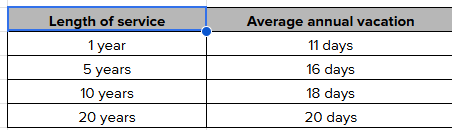
BLS averages for paid vacation, not necessarily combined PTO. Paid sick leave and holidays may be separate.
Executive packages vary significantly by employer, industry, and employment agreement. Four to five weeks of vacation or a discretionary unlimited policy can be part of a competitive executive package, but there is no universal executive standard.
And here's the part I care about most:
How many days employees are offered matters considerably less if the organization makes taking those days practically impossible.
Why Unlimited PTO Became So Popular
Unlimited PTO wasn't necessarily a bad idea.
It gained popularity as companies competed for talent, embraced flexible work, and shifted toward measuring results instead of hours. It signaled trust and autonomy.
There's also a financial incentive. As a CPA, I can't ignore the balance sheet. Accrued vacation (a balance sheet liability) can create a financial obligation for employers. In states like Colorado and California, earned vacation generally must be paid out at separation.
A properly designed unlimited PTO policy may avoid accumulating that same vacation liability, subject to state law and how the policy actually operates. And that's attractive to employers because it is burdensome to track and pay out, especially for small businesses.
However, eliminating an accrual liability doesn't automatically create a culture of rest. Without clear expectations, coverage plans, and leaders who model taking time away, unlimited PTO can become an unlimited guilt policy.
Employees technically have permission to leave. They just don't feel they can.
Unlimited PTO + unlimited meetings = employees who never refresh.
Let's Talk Numbers. Because I'm a CPA.
Consider an executive earning $250,000 annually. Using a 2,080-hour work year, that's approximately $120 per hour in base salary alone.
Now imagine 15 hours each week spent in meetings that could be eliminated, shortened, or delegated.
That's approximately:
$1,800 per week
$7,200 over four weeks
$90,000 annually over 50 working weeks
That's $90,000 in executive salary time allocated to potentially unnecessary meetings!!! Don’t forget, that's before benefits, payroll taxes, or the value of strategic work that never gets completed.
While it’s not necessarily cash saving, it is a tremendous opportunity cost.Think about what that executive could accomplish with 15 additional hours each week?
Improve margins? Solve a recurring staffing problem? Develop a new revenue stream? Finally address the operational bottleneck everyone complains about?
We obsess over labor costs while casually filling our most expensive employees' calendars with meetings.
That's a very expensive way to avoid making decisions.
Oxygen 1st: Your Best Ideas Need Room to Breathe
Think about your last truly brilliant idea.
Did it happen during your seventh consecutive Zoom meeting?
Or did it come in the shower?
On a walk?
While driving without the radio?
Maybe while doing absolutely nothing productive.
There's a reason for that.
Research on incubation and mind-wandering suggests that stepping away from a demanding problem can support creative thinking and help people discover new connections.
A well-known 2012 study published in Psychological Science found that participants who performed an undemanding task during a break improved their performance on a creative problem-solving task.
Our brains don't necessarily stop working when we step away from our desk - especially for executives or consultants.
Sometimes stepping away is when the connections finally happen.
This is fundamental to my Oxygen 1st philosophy.
We cannot expect people to create, innovate, and solve complex operational challenges when every minute of their day is spoken for.
White space isn't wasted space.
It's where strategy develops, creativity returns, and solutions emerge. And it gives people something else we routinely undervalue: the opportunity to enjoy their lives.
The Oxygen 1st Meeting Policy: Less Meetings. More Meaningful Work.
What if organizations treated employee energy with the same discipline they apply to budgets?
Here's the policy I'd love to see more organizations adopt.
1. Protect Two Meeting-Free Days Each Week
Give employees, especially senior leaders, two days to focus on strategic work, project execution, and creative problem-solving. NO MEETINGS. ZERO.
Yes, emergencies happen. But routine status updates aren't emergencies.
If two days aren't operationally feasible, start with one and build from there.
2. Put Meetings on a Budget
My proposed starting guardrail: no more than 50% of the standard workweek in meetings for roles that also require substantial independent work.
At 60%, review the calendar. At 70%, conduct an immediate meeting audit.
These are proposed management guardrails, not universal research-backed limits. Customer-facing and other meeting-intensive roles will require different thresholds.
3. Make Every Meeting Earn Its Keep
Before sending an invitation, ask:
Is there a decision to make?
Does everyone invited need to participate?
Could this be an email, dashboard, or shared document?
Can we accomplish the same outcome in 15 minutes instead of 60?
And my personal favorite:
If we're having another meeting to discuss what happened in the last meeting, we have a problem.
4. Build Breathing Room Into Every Day
Give people 10–15 minutes between meetings.
Protect lunch breaks.
Encourage walking breaks and focus blocks. Make this a breathing, oxygen enriched culture.
Normalize stepping away without explaining every minute of your absence.
People need time to think, move, eat, regroup, and yes, use the bathroom. We're human beings, not Zoom accessories.
5. Make PTO Something People Actually Take
I generally favor structured PTO accrual policies because they create clear expectations, support financial forecasting, and can simplify administration.
Unlimited PTO can work for executives, but only when paired with accountability for actually taking time away. Because executives usually get where they are from working extremely hard, and burnout can be around the corner for them. If the culture encourages time off, they are more likely to participate.
Set minimum vacation-use expectations. Establish backup coverage. Encourage meaningful periods of disconnection.
And make sure policies comply with applicable state laws governing earned vacation, sick leave, and payout.
The goal isn't to offer the most impressive PTO policy. It's to create a workplace where people actually recover.
Engagement Doesn't Come From Filling Calendars
According to Gallup's 2025 State of the Global Workplace report, global employee engagement fell to 21% in 2024, while manager engagement dropped from 30% to 27%.
Gallup estimated the engagement decline cost the global economy $438 billion in lost productivity.
Those numbers don't prove meetings alone caused the decline. But they make one thing clear: organizations cannot afford to ignore how work is designed and how managers experience it.
People want to contribute.
They want to accomplish meaningful work, solve problems, feel trusted, and go home with enough energy left to enjoy the lives they're working so hard to build.
They don't need another pizza party or mandatory wellness webinar wedged between six meetings. They need the time and support to do their jobs well.
And then they need permission to stop to breathe.
PTO Is Supposed to Restore Us. So Should the Workweek.
Let's circle back to where we started.
PTO exists so people can step away, recalibrate, and return energized.
But recovery shouldn't happen only during a vacation.
It should be part of how we design our days, weeks, and organizations.
A walk between meetings.
An uninterrupted afternoon.
A real lunch break.
A week away without 400 emails waiting upon return.
Those aren't signs of a lazy workforce.
They're signs of a sustainable one.
Unlimited PTO layered on top of unlimited meetings doesn't create freedom. It creates exhaustion with excellent branding.
If you want employees who are engaged, creative, productive, and committed to your business, give them room to breathe.
Because if your people are too busy attending meetings to actually do their work, you don't have a productivity problem.
You have an Oxygen problem.
And it's time to fix the leak.
